


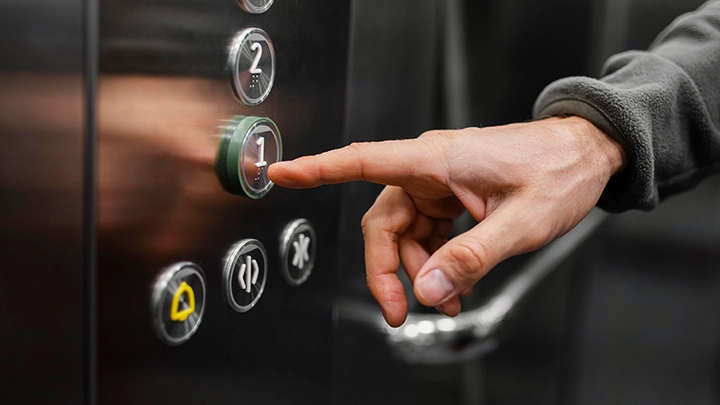
An elevator control system is the central unit that coordinates elevator operation, connecting different components such as the traction system, door system, safety devices, and passenger interfaces. It determines how the elevator starts, stops, changes speed, responds to calls, and maintains accurate floor positioning.
For building owners, elevator manufacturers, and maintenance companies, selecting the right elevator control system is essential for improving operation efficiency, reducing downtime, and ensuring long-term reliability.
What Is an Elevator Control System?
An elevator control system is an electronic management system that controls the movement and operation sequence of an elevator. It receives signals from different devices, processes operation commands, and sends instructions to related components.
A modern elevator control system typically manages:
- Elevator starting and stopping
- Speed adjustment
- Floor positioning
- Door opening and closing
- Safety monitoring
- Fault detection
- Communication between components
The control system works together with the traction system, car system, door system, and safety protection system to achieve smooth and safe vertical transportation.
Main Components of an Elevator Control System
A complete elevator control system consists of several key parts that work together.
| Component | Function |
|---|---|
| Main Controller | Processes signals and controls elevator operation logic |
| Control Cabinet | Houses electrical control components and protection devices |
| Drive Interface | Communicates with the traction system to regulate motor movement |
| Input/Output Modules | Receive signals from sensors, buttons, and safety devices |
| Position Detection System | Provides accurate floor location information |
| Communication Module | Enables data exchange between elevator components |
Each component has an important role in maintaining stable elevator performance.
How Does an Elevator Control System Work?
The working process of an elevator control system can be divided into several steps:
1. Receiving Passenger Requests
When passengers press a call button or select a floor, the elevator control system receives the input signal.
The system identifies:
- Current elevator position
- Requested destination floor
- Passenger traffic conditions
- Elevator availability
2. Processing Operation Commands
The controller analyzes the information and calculates the appropriate movement plan.
For multiple elevator systems, the controller may consider:
- Distance to the requested floor
- Current elevator direction
- Passenger waiting time
- Traffic patterns
This helps improve transportation efficiency in commercial buildings.
3. Controlling Elevator Movement
After processing the command, the control system sends signals to the traction system.
The traction system then controls:
- Motor speed
- Acceleration
- Deceleration
- Stopping position
A precise control process helps reduce vibration and improve passenger comfort.
4. Managing Door Operation
After the elevator reaches the target floor, the control system communicates with the door system.
It controls:
- Door opening timing
- Door closing sequence
- Safety sensor response
- Reopening actions when obstacles are detected
Key Functions of Modern Elevator Control Systems
1. Accurate Floor Positioning
One of the most important functions is ensuring the elevator stops at the correct floor level.
High-precision positioning helps:
- Improve passenger safety
- Reduce uneven floor alignment
- Enhance accessibility for passengers and equipment transportation
2. Smooth Speed Control
The controller adjusts elevator speed during:
- Starting acceleration
- Constant-speed travel
- Braking and stopping
A well-designed system provides smoother operation and reduces mechanical stress on elevator components.
3. Safety Monitoring
The control system continuously receives signals from safety components, including:
- Door safety devices
- Limit switches
- Overload sensors
- Emergency protection systems
If abnormal conditions are detected, the system can activate protective actions.
4. Fault Detection and Maintenance Support
Modern elevator controllers can record operation information and detect potential problems.
Common monitored conditions include:
| Monitoring Item | Purpose |
|---|---|
| Door operation status | Identify door-related failures |
| Motor operation data | Check traction performance |
| Sensor signals | Detect abnormal inputs |
| Error codes | Support troubleshooting |
This helps maintenance teams locate issues faster.
Factors to Consider When Selecting an Elevator Control System
Choosing a suitable control system requires evaluating several technical factors.
1. Elevator Application
Different applications have different requirements.
| Application | Key Considerations |
|---|---|
| Passenger Elevator | Comfort, speed control, low noise |
| Freight Elevator | Load capacity and durability |
| Hospital Elevator | Smooth operation and precise leveling |
| Residential Elevator | Compact design and reliability |
2. Load Capacity and Speed Requirements
The controller should match:
- Rated load
- Elevator speed
- Motor power
- Operation frequency
An unsuitable control system may affect efficiency and service life.
3. Compatibility With Other Components
A control system should work properly with:
- Traction machines
- Door operators
- Safety devices
- Position sensors
Component compatibility is important for stable installation and future maintenance.
4. Maintenance and Replacement Requirements
For long-term operation, buyers should consider:
- Availability of spare parts
- Technical support
- System upgrade possibilities
- Ease of troubleshooting
A reliable supply chain helps reduce elevator downtime.
Traditional Control Systems vs Modern Elevator Control Systems
| Feature | Traditional System | Modern System |
|---|---|---|
| Control Method | Basic operation control | Intelligent electronic control |
| Energy Efficiency | Lower optimization | Improved energy management |
| Fault Detection | Limited | Advanced monitoring |
| Traffic Management | Simple scheduling | Intelligent dispatching |
| Maintenance | Manual diagnosis | Data-assisted maintenance |
Modern systems focus not only on operation but also on efficiency, safety, and lifecycle management.
Why Elevator Control Systems Are Important
The elevator control system directly affects:
- Passenger experience
- Elevator safety
- Operation efficiency
- Maintenance costs
- Equipment lifespan
As buildings become taller and elevator usage becomes more frequent, control technology continues to play a critical role in improving vertical transportation performance.
Conclusion
An elevator control system is the core technology that connects and manages every major elevator component. From receiving passenger commands to controlling traction movement and ensuring safety responses, it determines the overall performance of an elevator.
When selecting an elevator control system, manufacturers and buyers should evaluate application requirements, component compatibility, control accuracy, and long-term maintenance needs. A properly matched system helps achieve smoother operation, higher reliability, and better lifecycle performance.


